
A visitor enters a factory without proper safety induction. Another contract worker walks into a restricted area without valid documentation. One missed check, and suddenly a company faces a safety violation, operational shutdown, or worse, a serious workplace accident.
This is exactly why Indian industries are rapidly shifting toward digital visitor assessments and automated compliance systems.
From manufacturing plants and pharma facilities to steel units and IT parks, businesses today are under constant pressure to maintain safety standards, manage audits, and ensure regulatory compliance. According to global workplace safety studies, nearly 80% of industrial incidents occur because of human error, process gaps, or inadequate safety training.
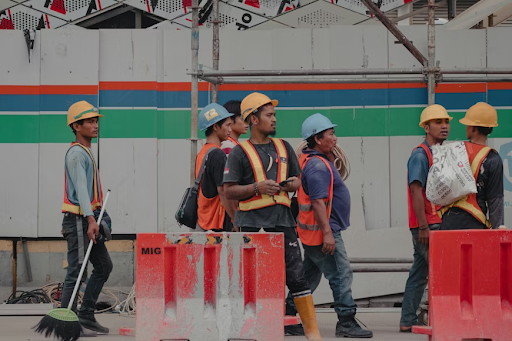
That’s where modern visitor assessments, combined with a powerful labour management system, are transforming the way companies manage safety and compliance.
In this blog, we’ll explore how visitor assessments improve workplace safety, why contract worker management is becoming essential for Indian industries, and how Scrum Systems Pvt. Ltd. is helping organizations automate compliance through intelligent solutions like LabourWorks™ and VisiteX™.
Why Visitor Assessments Are No Longer Optional
A few years ago, paper registers and manual security checks were considered enough. Today, they are liabilities.
Modern industries deal with:
- Multiple contractors and vendors
- Temporary workers
- High visitor volumes
- Strict labour law compliance
- Frequent audits
- Safety training requirements
When companies rely on manual systems, errors become unavoidable. Visitor records go missing. Safety inductions are skipped. Unauthorized entries happen unnoticed.
A digital visitor assessment system solves this problem by ensuring every individual entering the premises is verified, documented, trained, and compliant before access is granted.
This process becomes even more powerful when integrated with a contract labour management system.
What Exactly Is a Visitor Assessment?
A visitor assessment is a digital verification and safety evaluation process conducted before allowing visitors, vendors, or workers into a workplace.
It typically includes:
- Identity verification
- Safety induction
- Health declarations
- Compliance checks
- Training validation
- Access approvals
- QR or biometric authentication
Modern visitor management software automates these processes within minutes.
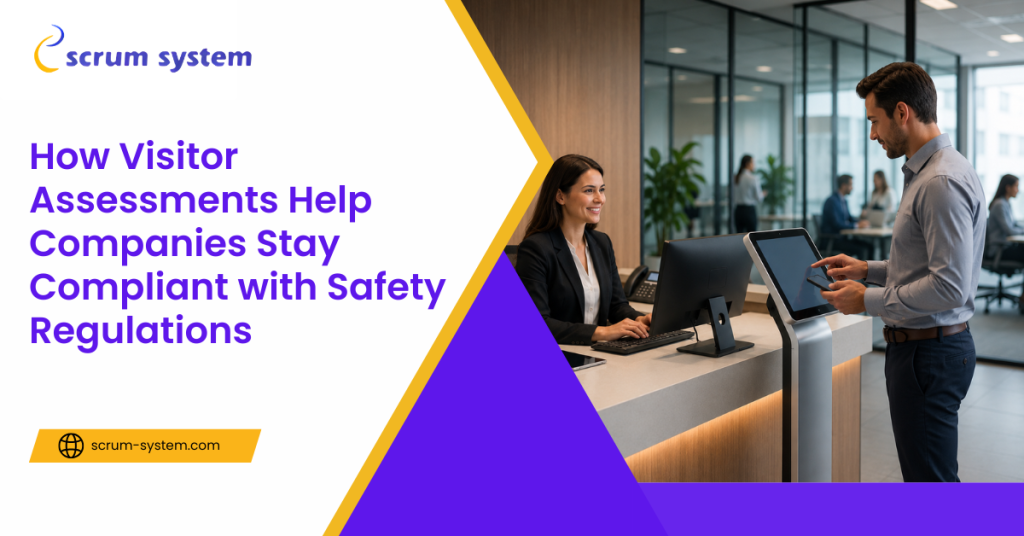
Solutions like VisiteX™ by Scrum Systems Pvt. Ltd. allow organizations to create secure, contactless, and audit-ready visitor experiences.
Their system includes:
- QR-based visitor badges
- Real-time visitor tracking
- Instant host notifications
- Safety briefing integration
- Compliance-ready digital logs
- Multi-site management capabilities
This significantly reduces security risks while improving operational efficiency.
How Visitor Assessments Improve Safety Compliance
1. Ensures Mandatory Safety Training
One of the biggest compliance gaps in industries is untrained personnel entering operational zones.
A modern labour management system integrated with visitor assessments ensures that no visitor or contractor enters the facility without completing mandatory safety induction.
Scrum Systems’ Safety Training Kiosk (STK™) automates this entire process through AI-enabled safety training modules.
This helps companies maintain:
- Factory Act compliance
- EHS standards
- Audit documentation
- Worker accountability
For industries with heavy machinery or hazardous operations, this is critical.
2. Strengthens Contract Worker Management
Managing third-party workers is one of the biggest operational challenges in India today.
Many companies struggle with:
- Contractor documentation
- Attendance tracking
- Skill verification
- Worker identity validation
- Compliance monitoring
An advanced contract labour management system simplifies this entire workflow.
According to Scrum Systems Pvt. Ltd., LabourWorks™ helps organizations automate onboarding, attendance, compliance monitoring, and workforce tracking in real time.
Their platform supports:
- Biometric verification
- Contractor dashboards
- Compliance alerts
- Worker profiling
- Automated onboarding
- Real-time access control
This makes contract worker management far more transparent and reliable.
3. Reduces Compliance Risks and Penalties
Compliance failures are expensive.
Missing documentation, expired certifications, or unverified visitors can result in:
- Regulatory penalties
- Operational delays
- Failed audits
- Insurance issues
- Safety incidents
A digital labour management system prevents this by creating centralized, real-time compliance records.
LabourWorks™ uses SPC Methodology™ to proactively detect and prevent non-compliance instead of reacting after issues occur.
That’s a major advantage for industries where compliance requirements change frequently.
4. Improves Emergency Response
During emergencies, companies must instantly know:
- Who is inside the facility
- Which contractors are present
- Whether visitors completed safety induction
- Which zones are occupied
Manual registers simply cannot provide this information fast enough.
Integrated visitor and labour management systems solve this problem through live dashboards and real-time occupancy tracking.
Scrum Systems also offers Smart Assembly Point™ solutions that help companies conduct faster evacuations and improve emergency accountability.
Why Indian Industries Are Adopting Labour Management Systems Rapidly
India’s industrial sector is evolving rapidly.
With increasing digitization, stricter labour regulations, and growing contractor dependency, businesses now require smarter workforce solutions.
A modern labour management system helps organizations:
- Reduce manual work
- Improve workforce visibility
- Simplify audits
- Track contractor performance
- Automate compliance
- Increase operational efficiency
Industry reports show that companies using structured labour management tools experience up to:
- 20% improvement in workforce productivity
- 15% reduction in labour leakages
- 30% better contractor compliance accuracy (scrum-system)
This is why contract worker management is no longer just an HR function — it has become a business-critical process.
How Scrum Systems Pvt. Ltd. Supports Compliance Automation
Based in Pune, Scrum Systems Pvt. Ltd. has emerged as one of India’s leading providers of compliance and safety automation solutions.
Their product ecosystem includes:
LabourWorks™
A comprehensive contract labour management system designed specifically for Indian industries.
VisiteX™
An intelligent visitor management software that digitizes visitor assessments and access control.
STK™ Safety Training Kiosk
An AI-enabled safety induction platform for workers and visitors.
Smart Assembly Point™
A real-time evacuation and emergency accountability solution.
What makes Scrum Systems different is their focus on Indian industrial realities.
Their solutions are built for:
- Manufacturing plants
- Steel industries
- Pharma companies
- Cement factories
- Automotive facilities
- Multi-location enterprises
Instead of offering generic software, they provide practical, scalable systems tailored for compliance-heavy environments.
The Future of Workplace Compliance Is Integrated

The future of industrial safety is no longer about isolated systems.
Companies now need connected ecosystems where:
- Visitor assessments
- Labour management
- Contract worker management
- Safety training
- Compliance tracking
all work together seamlessly.
That’s exactly where integrated platforms like LabourWorks™ and VisiteX™ are making a huge difference.
As workplace regulations continue evolving, organizations that still depend on manual systems may struggle to keep up with compliance expectations.
The smarter approach is proactive automation.
Because in today’s industrial environment, safety compliance is not just about avoiding penalties, it’s about protecting people, improving efficiency, and building operational trust.