
Look, managing contract workers is a pretty big responsibility for Indian companies now, especially in manufacturing, construction, logistics, infrastructure, and other labour intensive type sectors. In practice, organizations end up coordinating contractors, checking worker documents, keeping attendance, handling wages, and staying on top of statutory records and yes, making sure safety stuff is actually followed at the workplace.
Doing all of this by hand can be a headache, delays happen, you get duplicate records,, attendance errors creep in, and compliance gaps show up at the worst time. A Contract Labour Management System (CLMS) tries to bring all those moving parts into one centralized digital place. It can support worker registration, document validation, attendance tracking, contractor coordination, safety training, payroll inputs, and compliance record keeping, in a more efficient way.
And since there are several workforce management solutions in India, businesses should really check platforms based on industry, workforce size, number of locations and the day to day operational needs. So here are a few Contract Labour Management Systems Indian businesses can consider in 2026.
1. Scrum System
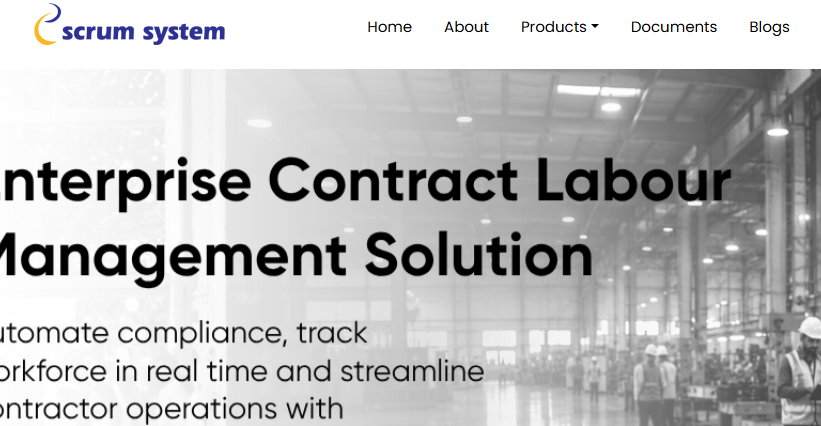
Scrum System has a Contract Labour Management System meant for managing contract workers across their employment lifecycle. Its LabourWorks platform leans toward connecting contractor management, worker onboarding, attendance, safety, and access control in one workflow, not in scattered spreadsheets.
The setup can handle registration and verification before someone even enters the workplace. Worker documents can be reviewed, medical fitness requirements can be managed too, and safety training can be pulled into the approval process. That kind of flow helps make onboarding to access more structured, at least in theory and usually in practice.
Attendance management is supported using biometric plus kiosk based solutions. So organizations can track workers across relevant locations and keep digital records instead of relying mainly on paper registers, that kind of old setup.
For manufacturing and industrial teams, having near real time visibility into workforce deployment can help supervisors see where contract workers are assigned. Safety info and training history can also be surfaced as part of the whole worker management routine.
By linking contractor coordination, worker verification, attendance, safety, and access management, Scrum System can help create a more organized approach to contract workforce administration.
2. Savvy HRMS
Savvy HRMS gives workforce management capabilities for organizations that need to coordinate contractors along with employees, attendance, payroll, and compliance activities from one centralized system.
Its contract workforce functions can help businesses keep worker and contractor information digitally. Attendance data can connect into payroll processes, and statutory requirements like PF, ESI, and applicable wage rules can be included in workforce administration.
This platform may fit organizations running across multiple locations, where keeping consistent workforce records becomes more and more annoying. Digital documentation and centralized reporting can also reduce how much you depend on manual operations.
Businesses evaluating it should compare features with their real industry requirements, workforce structure, and compliance processes, not just based on brochures alone.
3. Matrix Comsec
Matrix Comsec provides workforce plus access management solutions, for organizations managing big numbers of employees and contract workers.
The ecosystem includes biometric and RFID based technologies, so worker entry and exit can be captured. Attendance records then can be used to calculate working hours, and support payroll or broader workforce administration tasks.
For organizations with multiple access points or restricted zones, combining attendance with access control can give extra visibility into where workers actually moved during shifts.
Matrix solutions may also integrate with other systems, which matters if a company wants workforce information connected with existing HR, ERP, or payroll infrastructure.
4. Emsphere
Emsphere focuses on workforce planning and labour management, helping organizations align manpower needs with day to day operational requirements.
The platform can assist with contractor manpower requests, attendance, leave, approvals, and workforce allocation. Supervisors can check manpower needs and compare available workers against what’s planned.
This is useful in places where workforce demand changes according to production schedules, projects, or seasonal requirements, so you’re not stuck guessing manually.
Using centralized workforce information can also help improve planning, and reduce unnecessary back and forth between contractors and supervisors.
5. Spectra Vision

Spectra Vision is geared toward workforce management for organizations in construction, infrastructure, and other distributed work setups.
For companies managing workers across multiple project sites, centralized workforce records can make it easier to monitor worker deployment and contractor details. Digital attendance and workforce tracking can also give managers better visibility across different locations.
In construction, teams often need to coordinate workers based on project timelines, skill sets, availability, and location. A digital workforce management platform can help bring those requirements into a more structured process, rather than keeping everything in fragmented notes.
So in short, Spectra Vision supports distributed construction style operations by keeping workforce management more controlled and easier to review across sites.
6. Eilisys Ascent
Eilisys Ascent offers HR plus payroll management features that can back organizations in managing workforce administration, and also compliance-related stuff, in a practical way. For companies that work with contract labour, maintaining the right employee and worker records is kinda a core part of day to day control. Digital systems let teams sort documentation, attendance details, payroll inputs, and other workforce records without the usual mess.
It also helps when reporting becomes automated, because centralized information makes it easier for HR, and administration folks to pull records whenever they need them.
When organizations are assessing platforms like this, they should look at how smoothly the solution connects with their current payroll, attendance, HR, and compliance routines. Sometimes the “integration” part gets missed but it matters a lot.
How to Choose the Right Contract Labour Management System
Picking a CLMS is more than checking which vendor has the most features on paper. Businesses should think about how well the system actually fits into their workforce routines and industry needs, not just what it claims.
1. Consider Your Industry
Contract labour needs can look very different across industries.
A manufacturing organization might need biometric attendance, production-point monitoring, shift management, safety training, and controlled access to the workplace. Meanwhile a construction company might focus more on multi-site worker handling, project-based deployment, and contractor documentation.
Before you commit to any platform, figure out what exact problems your organization needs solved, and write them down in plain terms.
2. Evaluate Compliance Capabilities
Compliance is a big deal when managing contract workers in India. Organizations are expected to keep proper records, plus follow relevant labour and workplace requirements.
A good CLMS should include structured documentation, attendance records, contractor profiles, and relevant reporting options. Businesses should also confirm whether the software supports the statutory and operational expectations that apply to their particular business, and location(s) too.
3. Check Worker Onboarding Features
A strong system should make worker onboarding feel systematic. Registration, document collection, verification, medical fitness checks, safety training, and approvals may be part of one onboarding flow.
When onboarding is digital it cuts down on paperwork and gives management a clearer trail, like whether a worker really finished the required steps before getting access.
4. Look for Attendance and Access Integration
Accurate attendance matters for workforce administration, plus payroll processing.
Integration with biometric devices, kiosks, RFID systems, or other access technologies can reduce manual attendance entry (which is usually error-prone). Businesses should verify that the system supports their current hardware, and whether attendance data can feed into payroll, or other enterprise platforms.
5. Consider Scalability
Workforce needs may increase over time as the company grows. A system that runs fine at one site might later need to manage multiple locations, more contractors, and thousands of workers.
So scalability should be considered along with centralized reporting, role-based access, and multi-location support, before deciding on a long-term software approach.
6. Check Mobile and Real-Time Access
Supervisors and site managers often need workforce insights while they are away from the main office. Mobile access can let authorized users review attendance, approve requests, track manpower, and handle operational tasks right from the worksite.
Real-time visibility can also help managers act faster when there are workforce shortages, unauthorized access attempts, or document-related issues.
Conclusion
Contract labour management is more than simply keeping attendance records. Businesses have to coordinate contractors, confirm worker details, manage onboarding, track attendance, maintain safety records, and keep workforce documentation organized and available.
A modern Contract Labour Management System can bring these functions together, and reduce reliance on disconnected spreadsheets, and paper-based processes.
Platforms like Scrum System, Savvy HRMS, Matrix Comsec, Emsphere, Spectra Vision, and Eilisys Ascent can take different approaches to contract labour and workforce management.
The best selection mostly depends on the organization’s workforce size, industry, number of locations, current technology, compliance obligations, and the practical priorities on the ground. Businesses should test each platform against their actual workflow, and choose the one that supports both current needs and future scaling.
And for organizations trying to build a structured process for contract worker registration, verification, safety, attendance, and workplace access, a specialized CLMS can provide a centralized base for more efficient workforce administration.