
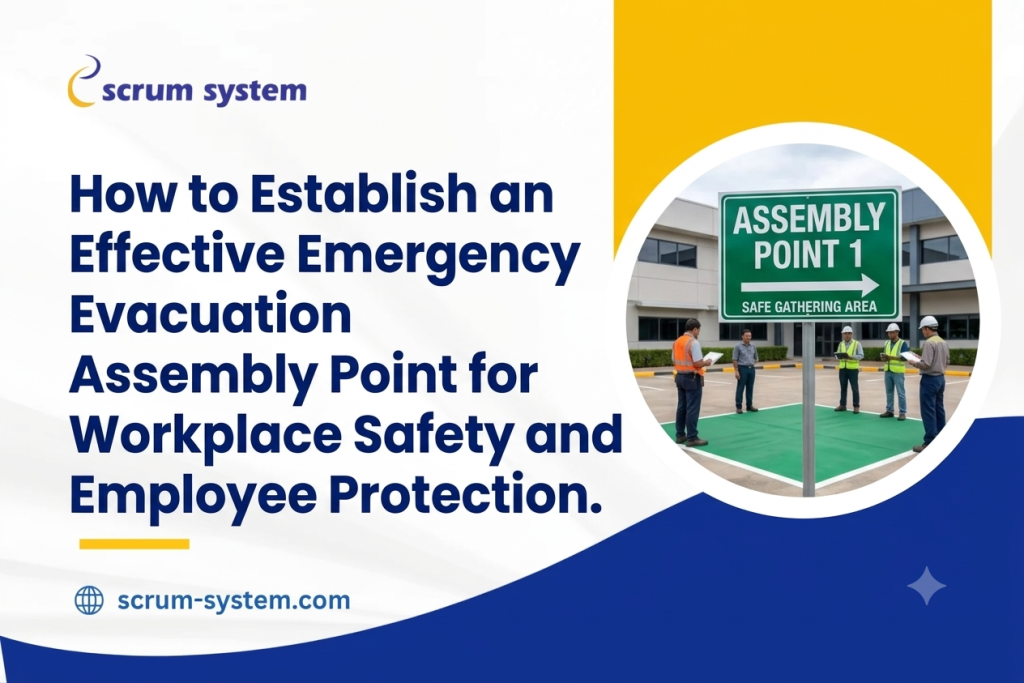

How to Create a Safe and Effective Workplace Emergency Evacuation Plan?
Safety in the workplace is very important. This extends to making sure that employees know how to respond to any unexpected emergencies such as fire, chemical spillages, gas leak, natural disaster or equipment failure. An effective evacuation plan can help protect your employees, visitors, contractors and other individuals. One of the most important parts of an effective emergency plan is having a set evacuation point.
An emergency evacuation assembly point is a set location outside of the workplace that employees and visitors can gather. This means that Safety Officers and emergency staff can easily count individuals and identify those that are missing. Choosing the correct assembly point, clear communication and regular practice can improve emergency preparedness.
1. Choose a Safe Assembly Point
The first thing to consider when choosing an effective assembly point is where to put it. It should be far enough away from your building to keep individuals safe from any hazards. Consider choosing an open space within your premises that can easily be accessed by employees without them having to go through any dangerous areas. It should also be easily accessible by emergency staff and not block any fire engines, ambulances or emergency vehicles.
Consider the following when choosing your assembly point:
- Keep a safe distance from any buildings, hazardous storage, electrical and other dangerous areas.
- Ensure it can easily be accessed by employees with clear evacuation routes.
- Ensure there is enough space for all employees, contractors, visitors and other individuals.
- Avoid placing it near any traffic, loading areas or areas that may be unstable.
- Where possible provide alternative routes.
Consider that some emergencies may mean that your assembly point is not suitable. Having an alternative assembly point will help employees move to a safe location.
2. Assembly Point Signs
Having clear signs will help employees know where to go. During an emergency people can become confused and panicky.
Ensure you have clear emergency assembly point signs placed in the correct outdoor areas. They should be easily seen from a distance and placed along your evacuation routes.
Your signs should include:
- Clear assembly point icons.
- Clear arrow directions.
- Easy to read instructions.
- Weather proof.
- Place them in the right areas such as entrances and assembly points.
Consider using reflective or lighted signs so they can be seen during low light.
3. Clear Evacuation Routes
Even if you have a good assembly point in place, you may struggle getting employees there if you don’t have clear evacuation routes. Your evacuation plan should provide direct and easy routes to your assembly point.
Consider creating evacuation maps showing emergency exits, staircases, escape routes, fire equipment and assembly points.
Consider:
- Keeping emergency exits clear.
- Displaying evacuation maps in commonly used areas.
- Identify alternative escape routes for different departments.
- Ensure employees know which exits to use.
- Ensure there are accessible evacuation routes for disabled or those with mobility issues.
- Ensure you review your evacuation routes each time there are changes to your layout, machinery or building.
4. Assign Emergency Roles
To have a successful evacuation you need to have employees, managers and emergency staff all working together. If roles aren’t clearly defined then important tasks like counting and contacting emergency services may be delayed.
Create an emergency team with clearly defined roles. Assign trained staff to carry out the roles below.
| Assigned Role | Main Responsibility |
|---|---|
| Evacuation Coordinator | Oversees evacuation procedures and coordinates the response |
| Floor Warden | Guides employees toward designated exits |
| Attendance Coordinator | Checks employee presence at the assembly point |
| First-Aid Personnel | Provides initial assistance to injured individuals |
| Communication Officer | Shares relevant emergency information with responders |
Employees should know who to contact during the evacuation. Visitors and contractors should be given basic guidance on emergency exits and assembly points. Never have employees go back into an unsafe building to look for missing individuals. Any information on missing individuals should be passed to emergency responders.
5. Employee Counting System
One of the main reasons for having an assembly point is to ensure all employees have safely evacuated. Once they have arrived at the assembly point they should be counted by supervisors or assigned individuals. You can keep track of how many employees are present by having updated records and visitor logs. You can also split them into departments to make it easier to identify who has arrived.
You should have a reliable counting system in place. This should include:
- Keeping updated records of employees and contractors.
- Keeping track of visitors.
- Assign individuals to specific groups.
- Count employees once they have evacuated.
- Inform emergency responders immediately if any are missing.
You can also use digital systems to help during an emergency. However you should have a backup plan in place in case there is no access to electricity, internet or digital devices.
6. Consider All Employees
Your evacuation plan should ensure that everyone in the workplace is safe. This includes disabled individuals, temporary injuries, medical issues or other accessibility requirements.
For example, wheelchair users may require accessible evacuation routes and assistance. Hearing impaired individuals may need visual emergency alerts and visually impaired individuals may need assistance.
Consider what the requirements are when creating your emergency plan. Create an evacuation plan to suit their needs. Training employees on how to help their colleagues in a respectful and safe manner can help during an emergency. Ensure visitors and temporary staff can easily understand the evacuation instructions.
7. Practice Regular Emergency Evacuations
Having an evacuation plan in place is not enough. Employees should understand how to follow it. Regular emergency evacuations will help employees know where to go, which exits to use, assembly point and who to report to. During your practice you should observe how quickly employees respond, if they can easily evacuate and how well your team can count. After each practice your safety coordinators should review the results to identify any improvements. If employees are struggling to find the assembly point you may need more signs to show them the way or clearer communication. If they are taking too long to count you may need to reorganise your attendance system Practice different emergency scenarios and at the correct frequency based on your workplace safety requirements.
8. Use Digital Tools
Using digital tools can help you provide and keep information on workplace safety. Using a digital platform you can provide employees with emergency instructions, evacuation guidance, safety training and important announcements. Having a central digital system can help employees know what to do during different emergency situations and where to go.
For example, you can use an emergency evacuation assembly point training module to help employees understand why it is important to have assembly points, evacuation routes, counting and communication during an emergency. Using interactive resources, training videos and knowledge tests can help increase employee understanding. Using digital kiosks can also make it easy for employees to access safety information.
However, this should be used to support other methods such as signs, evacuation practice, trained safety staff and clear emergency procedures.
9. Review Evacuation Plan
As your workplace changes with new equipment, new employees, building changes and changes in activities your evacuation plan may need updating.
Consider reviewing your emergency plan to ensure your assembly points and evacuation routes are suitable.
Consider:
- Reviewing assembly points for any new hazards.
- Check signs are clearly visible and in good condition.
- Update employee and visitor counting.
- Review evacuation routes after any changes to your workplace.
- Gather feedback from employees and safety coordinators.
- Review performance during drills and make improvements.
Ensure your evacuation procedure meets any fire safety regulations, building requirements and occupational health and safety requirements.
Conclusion
Having a safe and accessible assembly point is an important part of emergency preparedness. Having a well planned assembly point will help your organisation gather employees, count accurately, identify missing individuals and work with emergency services. Consider choosing the right locations, using clear signs, having clear evacuation routes, assigning roles and practising regular emergency evacuations. Increasing employee awareness and providing regular training will also help. An effective emergency evacuation assembly point is an important part of an overall safety strategy. By providing a well planned evacuation, training employees, having accessible communication and regularly reviewing safety you can improve emergency situations and create a safer working environment.
FAQs
1. What is an emergency evacuation assembly point?
An emergency evacuation assembly point is a set location outside of the workplace where employees, visitors and contractors can gather during an emergency.
2. How should businesses choose an assembly point?
Choose an open and easily accessible area that is away from buildings, hazardous materials, traffic and other dangers. It should also have enough space for all individuals.
3. Why is an assembly point important?
It will help your organisation count employees, identify missing individuals, provide assistance and work with emergency services.
4. What should signs include?
They should include clear icons, directions and easy to read instructions.
5. How often should evacuations be practiced?
They should be practiced regularly based on your safety requirements, risks and emergency procedures.
6. Who manages the assembly point?
Generally an assigned evacuation coordinator or safety staff will manage the assembly point. They will count and communicate important information to emergency services.
7. Can digital tools help with emergency evacuations?
Yes. Using a digital training platform can provide employees with evacuation instructions, interactive resources and safety tests to help them understand emergency procedures and assembly point requirements.