


Why You Need a Contract Worker Management System in 2026
Have you ever wondered how much time and money your organisation might be losing to delays, compliance errors, or confusing paperwork when managing contract workers? In 2025–26, with India’s labour laws evolving and businesses scaling faster than ever, relying on spreadsheets and manual records for contract workers can mean risk. That’s where a modern contract labour management system comes in — a tool not just for ticking regulatory boxes, but for transforming how you manage your workforce, improve productivity, and safeguard compliance. In this blog, we’ll explore why contract labour management, labour management and labour management system solutions are no longer optional, and how adopting a proven solution like the one from Scrum Systems Pvt. Ltd. can give you an edge.
If you run a factory, plant, warehouse, or construction site in India, you already know how chaotic managing contract workers can get. One missing compliance document, one shift mismatch, or one inaccurate attendance record is enough to disrupt operations. But here’s the real shocker: as per industry reports, Indian companies lose almost 15–20% productivity annually due to unstructured contract labour processes.
Now imagine stepping into 2026 with the same outdated registers, manual logs, and spreadsheet-based labour tracking… it simply won’t work. With new labour reforms, rising operational demands, and higher compliance expectations, businesses today must embrace a powerful contract worker management system.
In this blog, we’ll dive into why contract worker management is becoming mission-critical, how labour management challenges are evolving, and why a smart labour management system like LabourWorks™ by Scrum Systems Pvt. Ltd. is becoming the preferred choice across industries.
1. Why Contract Labour Management Matters More Than Ever
Contract labour management is no longer just about recording attendance or maintaining registers. It’s now a full operational layer involving:
- Worker onboarding
- Verification & compliance
- Shift planning
- Attendance tracking
- Wage & contractor billing transparency
- Safety training & gate control
- Real-time workforce insights
A modern contract labour management system integrates all these processes and ensures transparency, compliance, and control like never before.
Businesses today also face:
- Faster workforce turnover
- Stricter compliance checks
- Multi-vendor contractor complexity
- Site safety risks
- Increasing pressure to automate
This makes adopting a contract labour management software not optional but essential.
2. The Cost of Not Using a Labour Management System
Here are the risks companies face when labour management is still manual or semi-digital:
a) Compliance Penalties
A single missing document like PF, ESIC, or labour license renewal can attract heavy penalties.
A contract labour management system prevents such risks by providing reminders, digital compliance storage, and automated reporting.
b) Attendance Fraud
Buddy punching, manipulated entries, and manual attendance errors can inflate labour cost significantly.
Industry data suggests attendance fraud alone increases labour cost by up to 12–18% in many organisations.
c) Low Visibility
Without digital tracking, managers have no clarity on:
- Who entered the premises
- Whether they completed safety training
- Whether they are approved for the job
- How many hours they worked
- Whether contractors overbilled
d) Inefficient Workforce Utilisation
Poor shift planning = delays, downtime, and productivity dips.
e) Safety Vulnerabilities
Contract workers are often the least trained yet most exposed to risk at industrial sites.
Digital training & skill verification reduces incidents drastically.
A labour management system eliminates these issues by giving companies real-time control.
3. Why 2026 Is the Tipping Point for Contract Workforce Digitisation
India’s industries are transforming rapidly. Here’s why 2026 makes adoption non-negotiable:
1. New Labour Codes Enforcement
Stricter documentation, digital wage records, and compliance proof will be required.
2. Industry 4.0 Adoption
Automation, IoT, and predictive analytics demand integrated workforce systems.
3. Scale of Contract Workforce
Over 60% of India’s industrial workforce is contract-based—and the number is rising.
4. Rising Focus on Safety & ESG
A contract labour management software provides digital proof of safety training & skill competency.
5. Cost Optimisation Pressure
Digitisation reduces manual work, overtime fraud, and contractor disputes.
2026 isn’t just a year of change—it’s a year where companies must modernise to stay compliant and competitive.
4. The Role of Contract Labour Management Software in Modern Industries
A capable contract worker management system offers:
✔ Digital Onboarding
Capture worker details, ID proofs, licences, and contracts instantly.
✔ Automated Attendance (Biometric, RFID, Face Recognition)
No more forged entries.
✔ Real-Time Dashboards
Know workforce strength across sites instantly.
✔ Compliance Tracking
Auto-reminders, digital document vault, audit-ready reports.
✔ Safety Training Integration
No worker enters the plant without training clearance.
✔ Shift Management & Auto-Allocation
Predictive workforce planning improves productivity.
✔ Contractor Billing Transparency
Attendance-linked billing eliminates disputes.
✔ Visitor & Transport Integration
Complete on-site ecosystem control.
This is exactly where Scrum Systems excels.
5. Introducing Scrum Systems Pvt. Ltd. — The Trusted Leader in Workforce Digitisation
Scrum Systems Pvt. Ltd., headquartered in Pune, has been one of India’s leading innovators in workforce safety, security, and compliance automation for over 20 years.
Their flagship product LabourWorks™ stands out as one of India’s most reliable and industry-ready contract labour management systems.
6. What Makes LabourWorks™ the Perfect Contract Worker Management System for 2026
LabourWorks™ is engineered for industrial environments where safety, compliance, and workforce accountability are non-negotiable.
Here’s what sets it apart:
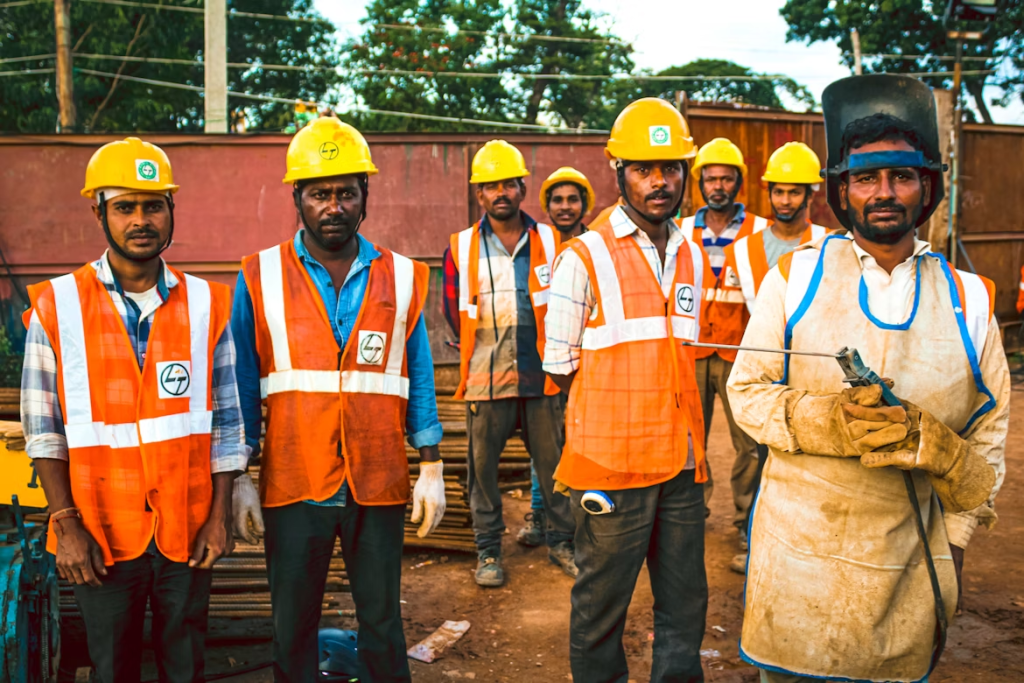
1. End-to-End Contract Labour Management
- Digital onboarding
- Contractor management
- Skill mapping
- Worker verification
2. Biometric & Face-Based Attendance
Highly accurate, fraud-proof attendance tracking.
3. Compliance Automation
Documents like:
- ESIC
- PF
- Labour licence
- Medical fitness
- Contract agreements
…are tracked automatically.
4. Safety Training Kiosk (STK) Integration
Scrum’s STK™ Safety Training Kiosk is a game changer.

Workers complete training digitally before entering the site, ensuring:
- Zero untrained entries
- Multilingual training
- Instant certification
5. Visitor & Transport Integration
Through solutions like VisiteX™ and TransportG™, Scrum provides a unified ecosystem for:
- Visitors
- Labour
- Vehicles
- Contractors
ensuring total site security
6. Real-Time Analytics
Custom dashboards allow management to monitor:
- Workforce availability
- Overtime
- Safety compliance
- Contractor performance
This transforms labour management from guesswork to intelligent decision-making.
7. Scalability Across Industries
LabourWorks™ is deployed across:
- Manufacturing
- Oil & Gas
- Pharma
- Steel
- Automobiles
- Chemical Industries
- Logistics & Warehousing
Its architecture supports multi-site operations effortlessly.
7. How LabourWorks™ Elevates Your Labour Management in 2026
With Scrum’s digital ecosystem in place, companies experience:
100% visibility of workforce
Real-time monitoring of every contract worker on every shift.
15–20% reduction in labour costs
Thanks to attendance accuracy and transparent contractor billing.
Reduced safety incidents
Because only trained workers can enter the plant.
Faster audits
All compliance documents stored digitally.
Better contractor relations
Clear, automated billing improves transparency.
Data-driven insights
Predict staffing gaps and overtime needs proactively.
LabourWorks isn’t just software, it becomes the operational nervous system of your organisation.
8. Why 2026 Demands a Contract Worker Management System
Whether you run a small plant or a multi-location organisation, the future of workforce management is digital, data-driven, and compliance-led.
A robust contract labour management system like LabourWorks™ ensures you stay ahead of:
- Labour law updates
- Compliance risks
- Safety demands
- Productivity expectations
- Digital transformation trends
Scrum Systems Pvt. Ltd., with its proven track record and powerful ecosystem of products, is one of India’s strongest and most reliable partners for this transformation.
If your organisation is gearing up for 2026, the right time to digitise your contract workforce is now.