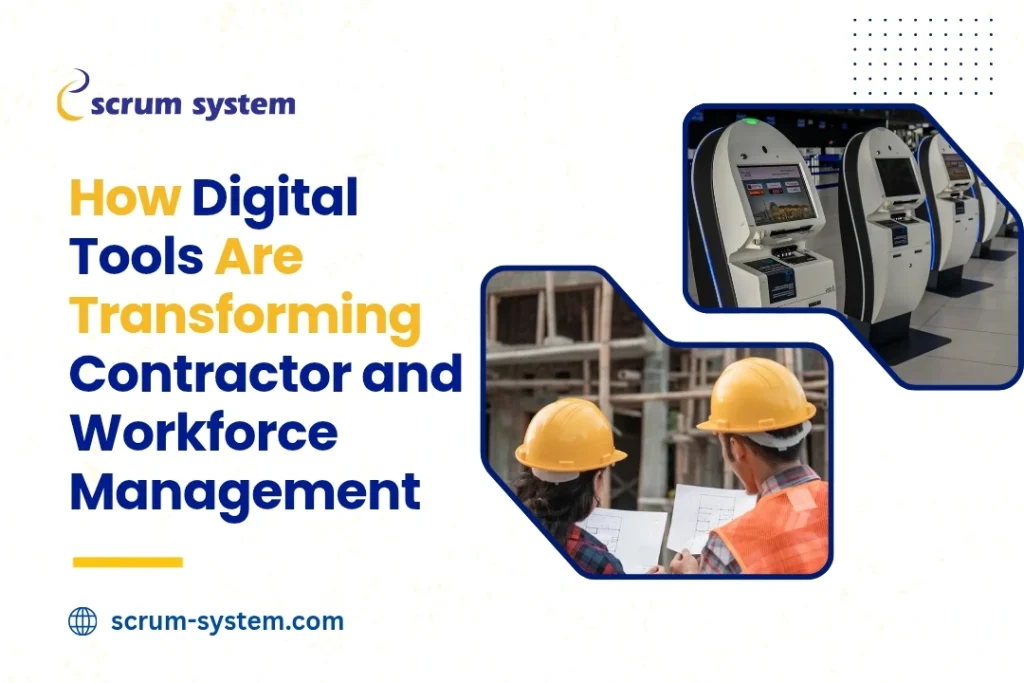

How Digital Tools Are Transforming Contractor and Workforce Management
Managing contractors and a large contract workforce is becoming increasingly complex for modern businesses. Manufacturing plants, construction companies, warehouses, and industrial facilities often coordinate multiple contractors, hundreds of workers, attendance records, wage calculations, safety requirements, and statutory compliance activities every day. When these responsibilities depend on paper registers and disconnected spreadsheets, even routine tasks can become time-consuming.Digital transformation is changing how organisations handle these challenges. Modern workforce management systems bring worker information, contractor details, attendance, documentation, and compliance processes into a more organised digital environment. By adopting contract labour management software, businesses can improve operational visibility, reduce repetitive administrative work, and make better-informed workforce decisions.
Why Traditional Contractor Management Needs an Upgrade?
In the old ways of managing contractors, the process is generally fragmented, and different departments establish and manage their own record sets. HR staff have contractor information, supervisors note down their attendance, safety teams log training records, and finance teams approve contractor invoices. Without a unified platform, different teams work with inconsistent or inaccurate information.
In some cases, a worker may arrive at a work site for the shift but has not yet undergone the mandatory safety induction or has forgotten a required document. A contractor may also submit an invoice that does not match the actual attendance recorded at a facility. All of these can be time-consuming to confirm manually.With increasing number of employees and sites, these problems become increasingly difficult to control. Digital technologies assist businesses to define consistent processes, correlate relevant data and identify issues at an earlier stage.
How Digital Tools Are Transforming Workforce Management?
1. Digital Worker Registration and Onboarding
Onboarding workers means collecting their personal info, checking their IDs, noting which contractors are assigned, and doing pre-qualification checks. If it’s done manually, the presence of unverified documents and duplication of data entry can cause delays.Digital onboarding enables a company to easily gather and document worker details using a predefined process. Documents required can be checked before being approved, and registration incompletes can be marked for further attention.For industrial workplaces, the process may also include medical fitness checks where applicable, background verification, safety induction, and personal protective equipment records. Bringing these steps into a coordinated workflow helps HR teams and supervisors understand whether a worker is ready for deployment.
2. Real-Time Attendance and Shift Tracking
Knowing who is on site is critical for planning staff numbers, for payroll and for contractor billing. Manually maintained registers can be difficult to check when multiple contractors supply on a number of different sites or shifts.With connected biometric and access-control hardware, digital attendance software is more reliable than manual tracking. Managers can use attendance data to compare employee check-ins and check-outs, detect inconsistencies, and track the available work crew.It also gives a more accurate basis for verifying working hours, overtime approvals and contractor invoices. This information enables supervisors to see if the staff required for a shift are available.
3. Automated Compliance Monitoring
Labour compliance not only relies on keeping documents for inspector visits. Organisations must monitor applicable requirements throughout the worker lifecycle, including contractor documentation, working hours, wages, training, and relevant statutory records.Digital systems can be used to log document validity, show outstanding approvals and set up alerts when time-based requirements are nearing date or have not been met. Certain systems can even incorporate linking compliance rules to workplace access.
For example, where set up and legally feasible, access can be restricted if a safety induction has not been completed or required authorisation has expired. This allows organisations to resolve some compliance gaps before they escalate into operational concerns.Using contract labour management software helps bring these checks into everyday workforce administration instead of relying entirely on manual follow-ups.
4. Better Contractor Coordination
Dealing with various contractors often involves notifying various parties regarding quantity of workers needed, approval, attendance, documentation, and contractual obligations. It is difficult to keep up when each contractor reports differently.Your digital contractor management platform can offer a more organized method of submitting worker information, uploading documentation, viewing manpower needs and tracking when actions are due. Contractor self-service capabilities, if offered, can take those daily requests via e-mail and phone calls out of the mix.Centralised information also helps organisations compare contractor performance using relevant operational measures, such as manpower fulfilment, documentation completeness, attendance accuracy, and timely submission of required records.This improves coordination between contractors and the teams responsible for managing the workforce.
5. More Accurate Wage Processing and Contractor Billing
Contractor billing is another area where digital tools can make a meaningful difference. Differences between recorded attendance, approved overtime, agreed wage rates, and submitted invoices can create disputes and delay payments.Official attendance information provided by a digital workforce system can help to inform wage calculations and reference bills. Finance teams can use this data in conjunction with contractor invoices to identify discrepancies before approving them.Depending on how it is used, workforce data, when linked to payroll or ERP systems, can also help to eliminate double entry and establish seamless data movement between HR, operational and finance.Automated calculations should still be reviewed against applicable wage requirements, approved overtime, contractual terms, and relevant deductions. Technology supports the process, while appropriate checks help ensure that payments remain accurate and fair.
6. Improved Safety Training and Access Control
Employers, contractors, supervisors, and workers all play a role in keeping the workplace safe. Companies require a trusted method to ensure that contract workers have met the necessary training and inspection requirements for their roles.Keeping digital records of training will allow safety teams to track when inductions are completed, renew relevant certifications, and flag workers for additional training. If linked to an approval process, induction records can stop workers from being booked on a task prior to the completion of those checks.Integration with access-control systems can provide an additional layer of operational oversight. Depending on the configured rules, the system can flag or restrict entry when required approvals are missing.This will enable a more consistent process for managing work readiness and supporting a safer working environment.
Significance of Contract Labour Management Software
A single digital system can link all the workforce activities that have traditionally worked in separate silos. This means, rather than having individual systems for on-site worker registration, attendance, contractor compliance, compliance checks, and reporting, organisations can combine all these activities.The right platform could feature centralised worker profiles, document verification, biometric check in and out, shift management, alerts and reporting, wage calculations, contractor billing reconciliation.Such functions are especially helpful for companies that deal with a significant number of employees or have several plants. Managers gain a more transparent perspective of employee status, and administration is provided with a reduced workload of information collection.But in selecting a solution, businesses should be guided by their actual needs. How well a solution integrates with existing systems, the safety of data, the nature of reporting, number of employees to be managed, and relevant regulations should be taken into account.
How the Scrum System Enables Digital Workforce Transformation?
Scrum System offers LabourWorks™, a contract labour management solution designed to help organisations manage contractor and workforce operations through connected digital processes.Official product info from Labour Works on its website includes worker onboarding and ID authentication; biometric clock-in / clock-out and shift management; statutory compliance management; wage calculation; contractors’ billing reconciliation; and reporting. The platform also describes workflows for safety training, document verification, contractor communication, and workforce deployment.These features are applicable to enterprises wishing to step away from disjointed manual procedures and adopt a more uniform workforce management framework.
The Future of Contractor and Workforce Management?
The future of workforce management is more connected and data-driven Workforce management is becoming more digitally connected, with digital attendance solutions, automated alerts on non-compliance, integrated reporting and workforce analytics enabling organisations to get ahead of the game through effective planning and proactive problem detection.As the tools are further adopted, organisations will be able to assess in greater detail the availability of manpower, the performance of contractors, the costs of working populations and the compliance picture. This will enable quicker decision making and standardised processes.But technology cannot substitute for good management. Good management, accurate information, trained operators, regular oversight and labour standards are still important. Good outcomes are most likely to be achieved when technology is used to assist with identifiable responsibilities and tangible work procedures.
Conclusion
Tools that digitalise construction site and workforce management By digitalising your managing system of workers’ registration, attendance, compliance, safety training and billing on site, you can eliminate several sources of sporadic work record keeping and have a better overview of daily workforce management.A well-chosen contract labour management software solution can help organisations manage contract workers more accurately, with more coordination and less administration. An effective implementation can give a business a system for managing their workforce that is capable of better managing operational complexity.
Scrum System’s Labour Works provides a digital solution that is definitely worth looking into for any organisation wanting to improve on their use of contract labour. Managing contract labour in a more transparent, efficient and reliable manner is achievable when you have the right technology, processes and continuous governance.